
deVinery Paradox Navigation
Why this changes the questions we can even ask about systems thinking

Most people, systems and disciplines think they’re managing three tension points: Self, Other and Collective, but the deVinery method shows that we are actually navigating three separate paradoxes in triangulation.
This not only changes how we understand sex and relationships, it also changes everything about how we try to solve law, relationships, psychology, systems, ethics and whether or not AI will end up turning against us or murmuring with us.
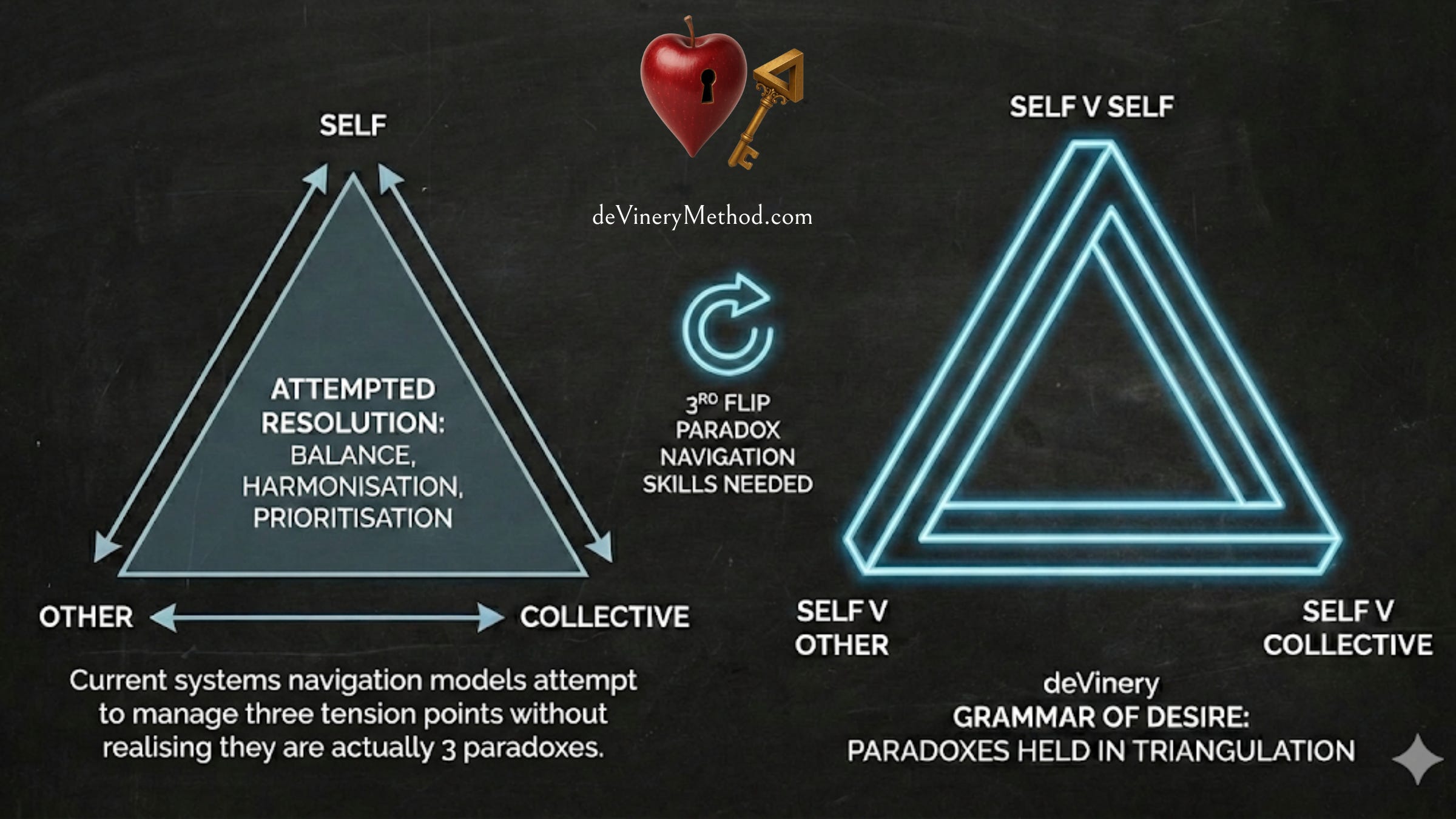
If we mistake the three pressure points as single tensions, we try to harmonise, balance or prioritise them. But this always ends with something losing out. It guarantees failure modes.
If we recognise that we are navigating three paradoxes, that changes the very questions we can even ask. If we recognise that those same three paradoxes are shaping every level of every relational system, we suddenly realise we have the Rosetta Stone of why systems work or not. It gives a grammar of emergence.
I won’t try to explain the paradoxes here as they are too easily miscategorised out of context, but ponder this.
Paradoxes by their very nature are unsolvable. When paradox is treated like a problem to solve, systems fall into degenerative loops. Power struggles. Moral theatre. Endless “fixes” that never quite work.
It changes everything to recognise these tensions as paradoxes and to learn to navigate them rather than resolve them using the deVinery three flips theory.
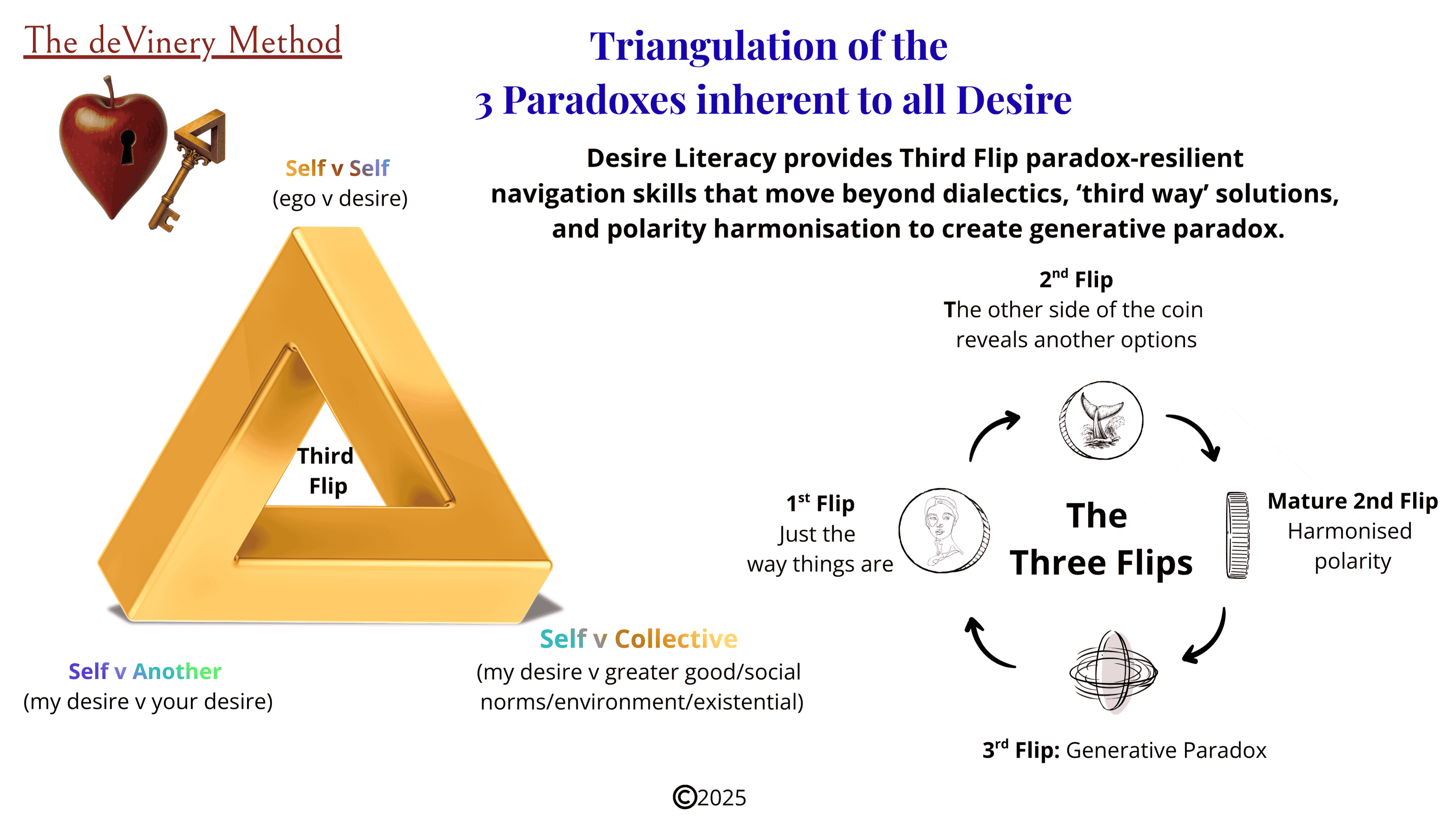
Further, the deVinery Method makes desire signatures visible and mappable. (Desire as an architecture of relational force, not necessarily a human phenomenological experience. You don’t have to be conscious or alive to be subject to it).
The deVinery Desire Signatures show that every person, organisation, and system moves through these paradoxes in a characteristic way that can be mapped. That pattern predicts whether it will create generative emergent outcomes or collapse into degenerative loops.
Once you can read that pattern, you can stop reacting downstream and start designing upstream and furthermore cultivate third flip paradox navigation skills.
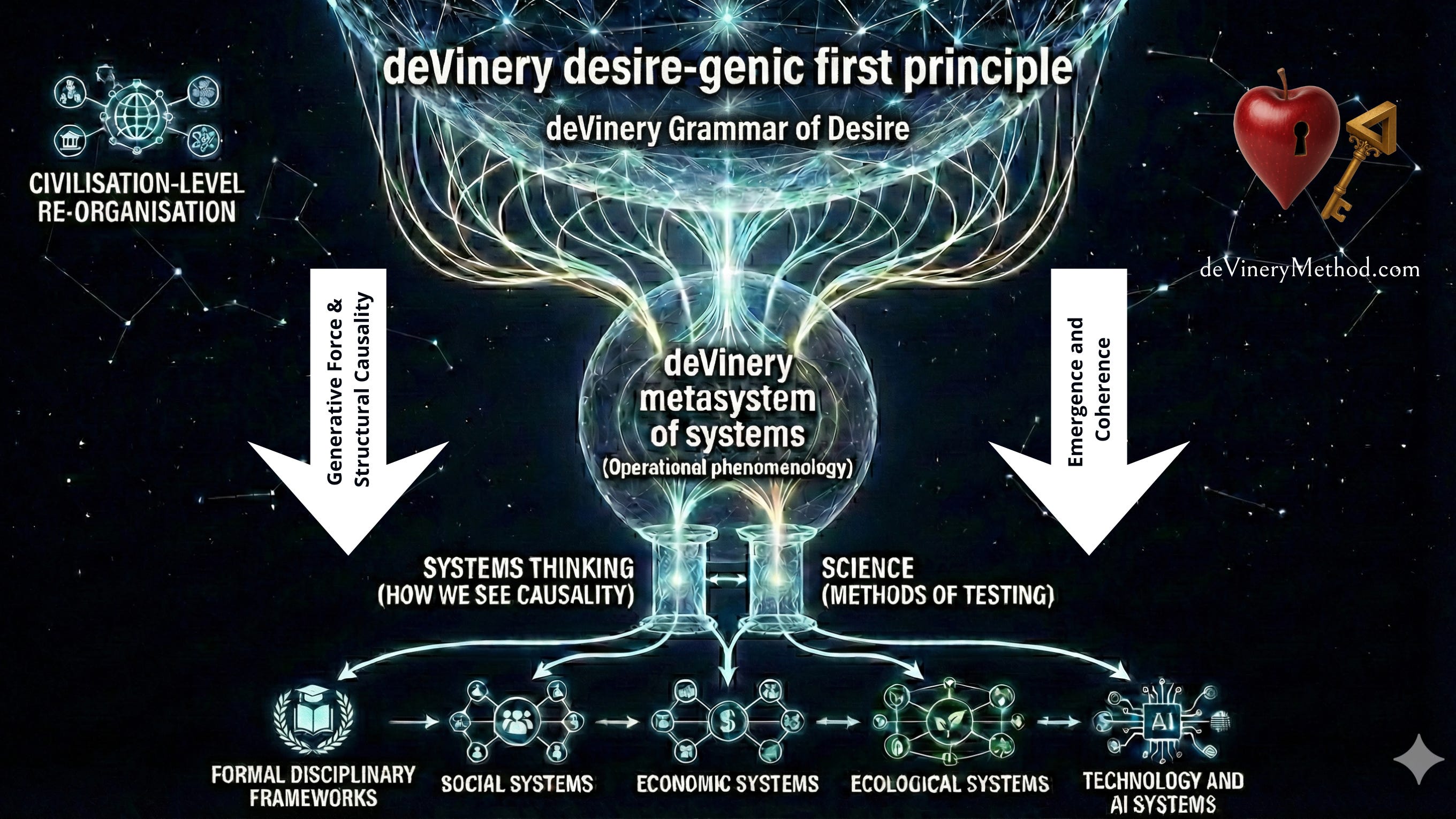
This work sits upstream of ethics frameworks, governance models, and most current AI safety debates. In fact, it reorganises the very disciplines in which those conversations are happening.
Instead of asking “How do we stop systems from doing harm?”
We can ask “What kind of desire signature are we building into them in the first place?”
I am early-stage in developing this, so don’t ask for deliverables. Instead, I seek:
The right minds to explore this further with, in my Desire Literacy Foundations Program
Introductions to movers and shakers and entry into the relevant conversations.
Philanthropic support so I can midwife this thing.
Because throwing money at it means I can make this happen now at this critical moment in AI development before our future is set, and we all benefit if AI doesn’t terminate our butts.
Just saying. (I’m Australian, expect irreverence).
More than that, if this thing is as big as I think it is, it will affect far more than AI governance. I am talking the level of civilisational reorganisation that calculus, systems thinking or literacy brought us. But even if it’s not that big, it is still already functional enough to be a big deal. And that’s worth contributing dollars to because we all benefit if this exists in the world.
We get to build the new era for emergence, not extraction.